
How to find us
Our rooms are in Suite 3 of The Highfields Centre, 2 Highfields Circuit — just off Wrights Road, opposite Port Macquarie Base Hospital.
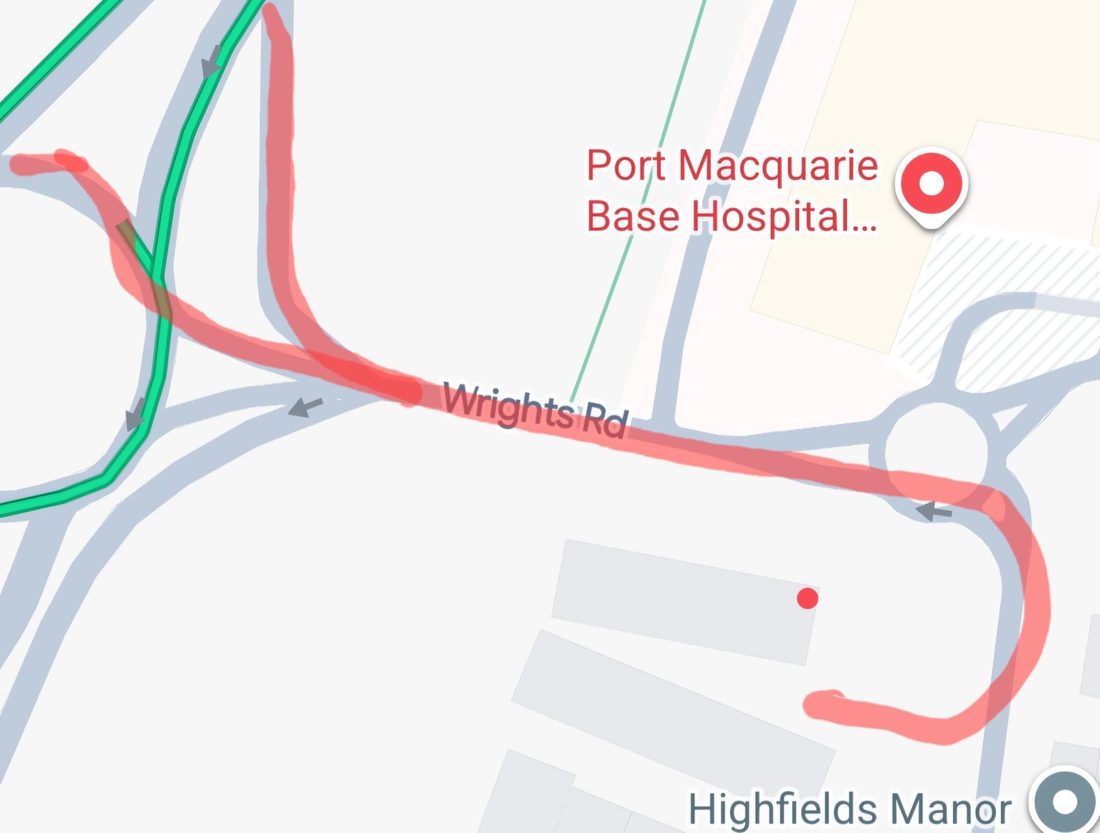
From the Oxley Highway, take the Wrights Road exit and follow Wrights Road towards Port Macquarie Base Hospital. At the roundabout just before the hospital, turn right into Highfields Circuit and follow it around to The Highfields Centre. If you have any trouble finding us, please give reception a call and we'll point you in the right direction.
Driving into our car park
The Highfields Centre has a private car park for clients and staff, behind a boom gate. You’ll drive past our rooms on the way in (the red arrow in step 1), so these photos take you round to the car park (follow the white arrows) and then back down the footpath to our entrance.
-
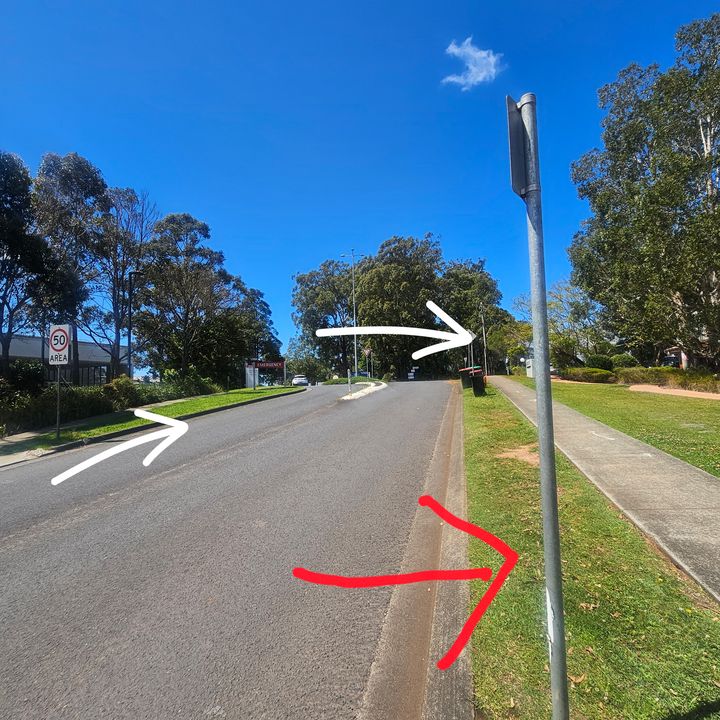
Head towards the hospital, then turn rightDrive up towards the hospital until you reach the roundabout, then turn right (left takes you into the hospital). The red arrow shows where our rooms are — you’ll walk back here from the car park.
-
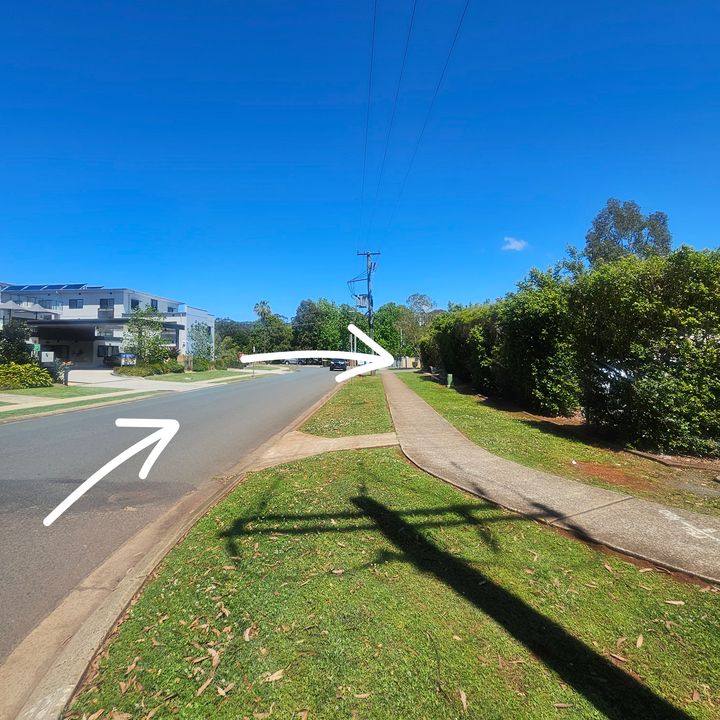
Follow the roadContinue along this road and turn right where the arrow shows, by the tall hedge.
-
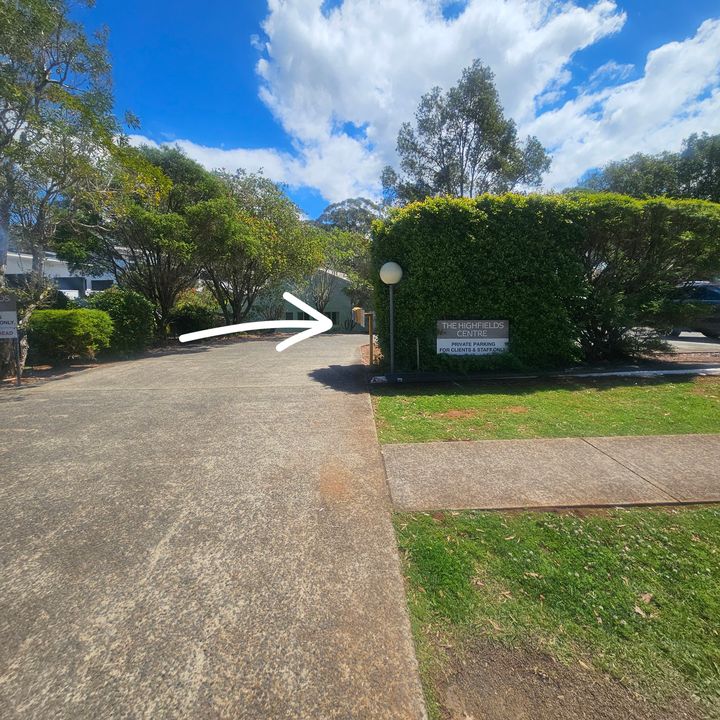
Turn in at The Highfields CentreTurn into the driveway beside The Highfields Centre sign (private parking for clients and staff).
-
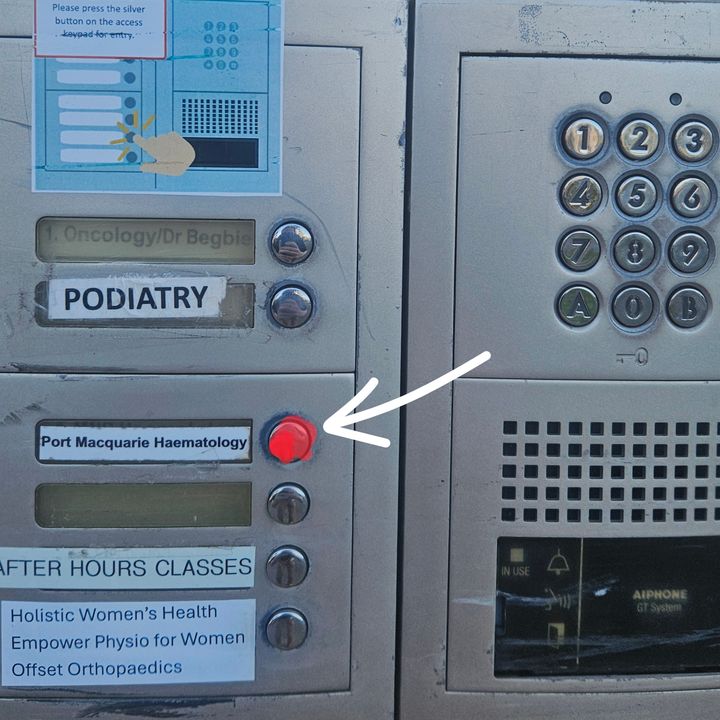
Use the intercom at the boom gateAt the car park boom gate, press the button beside the “Port Macquarie Haematology” label (marked in red) and reception will let you in.
-
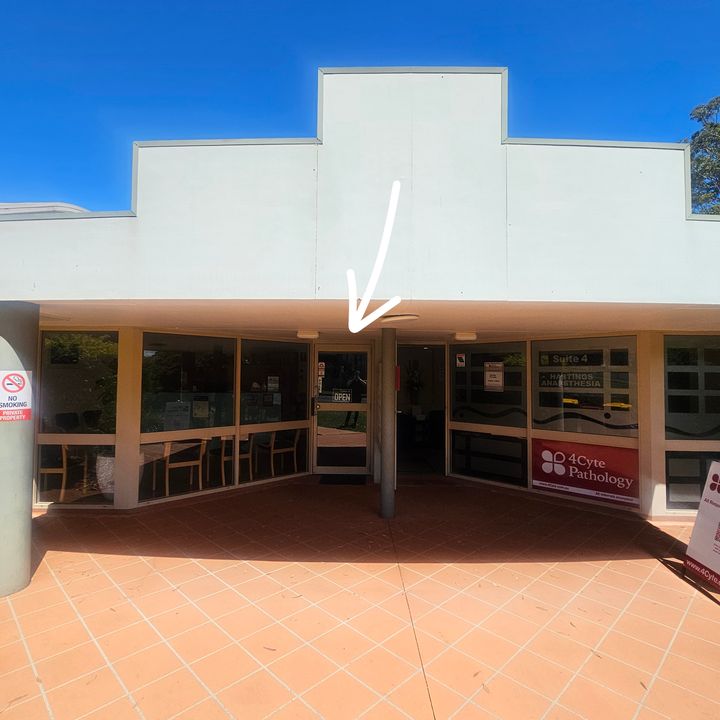
Walk down to our front entranceOnce you’ve parked, take the footpath down from the car park (there’s no need to walk along the road) and come in through the glass door marked by the arrow. We’re in Suite 3.
If you have any trouble with the intercom or the boom gate, or need a hand getting into the building, just call reception on 02 6581 4228 and we'll come and help.
What to expect at your first appointment
Being referred to a haematologist can feel daunting. We aim to make your visit as comfortable and straightforward as possible. Your first appointment will usually take 30–60 minutes and is a chance for your haematologist to get a full picture of your health.
Detailed history
Your haematologist will ask about your symptoms, medical history, family history, and current medications. Take your time — there are no silly questions.
Examination
A focused physical examination relevant to your haematological concern — for example, checking lymph nodes, the spleen, or signs of anaemia or bleeding.
Discussion and plan
Your haematologist will discuss their assessment, explain what they think might be going on, and outline any further tests or treatment that may be needed.
Follow-up
Depending on your results and diagnosis, your haematologist will arrange follow-up either at the practice, via phone, or in shared care with your GP.
What to bring
To make the most of your appointment, please bring the following:
- Your referral letter from your GP or specialist
- Medicare card and any private health insurance details
- A complete list of your current medications (including over-the-counter medicines and supplements)
- Any recent blood test results or pathology reports
- Any relevant imaging (CT, PET, ultrasound) on disc or with reports
- A list of any questions or concerns you'd like to discuss
- A support person, if you'd like one — you are welcome to bring family or a friend
Running late or need to reschedule? Please call us as soon as possible on 02 6581 4228 so we can offer your time to another patient. We understand things come up — just let us know.
After your appointment
After each visit, a clinic letter summarising your assessment and plan is sent to your referring GP to keep your care coordinated. If you need further blood tests, we will provide a request form or arrange these directly where possible.
Some patients will require treatment through our ambulatory infusion suite — this includes chemotherapy, immunotherapy, iron infusions, and blood transfusions. Our nursing team will guide you through what to expect and how to prepare for these appointments.
We are committed to keeping as much of your care as possible local, and to working closely with your GP and any other specialists involved in your care.